Part VI: The Social Compass
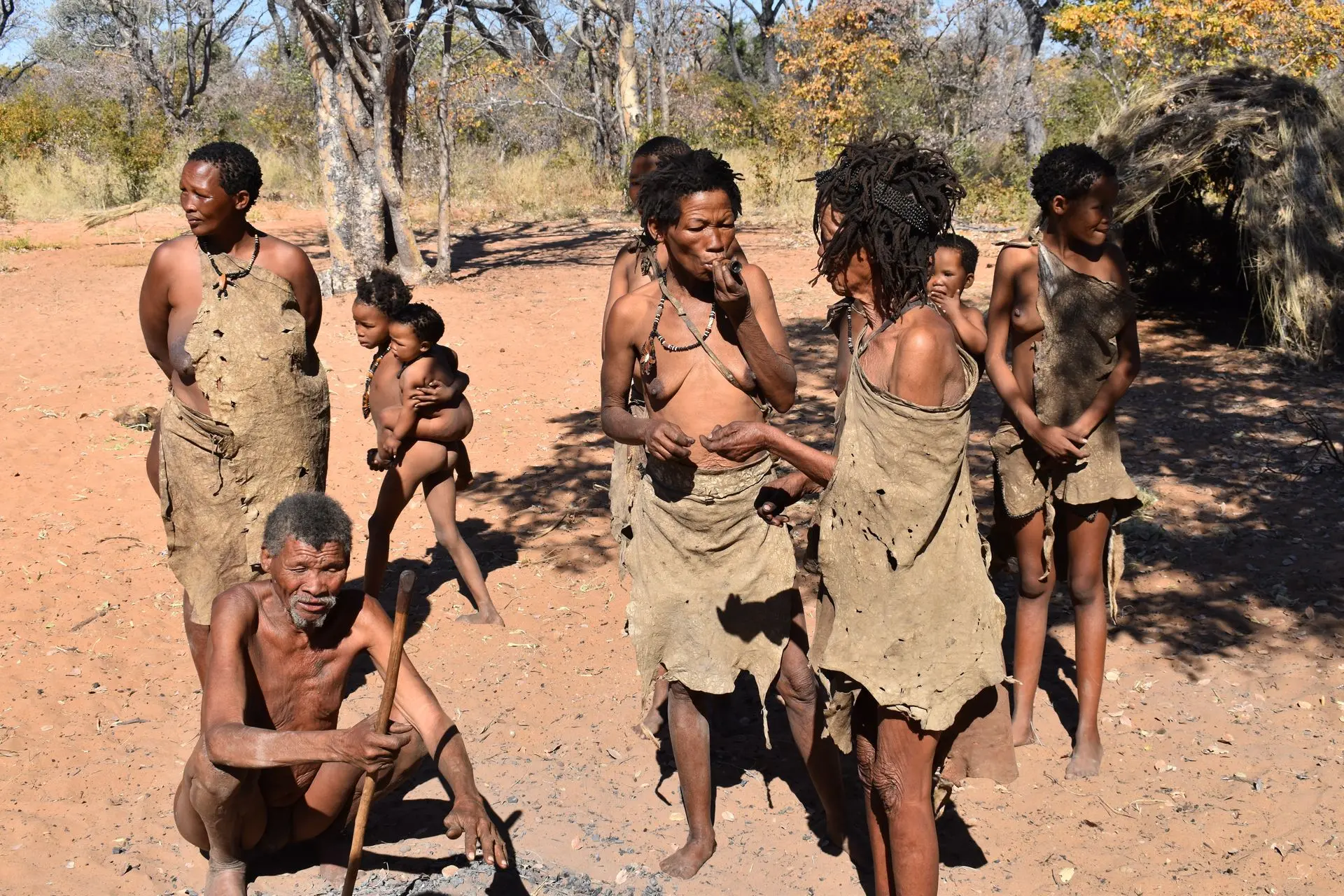
We did not evolve alone, but together—shaped by the bonds we formed. At the heart of our success lies an emotional architecture built on love, faith, and cooperation: first in the pair bond, then in family groups, and finally in the Band of Sisters and Brothers.
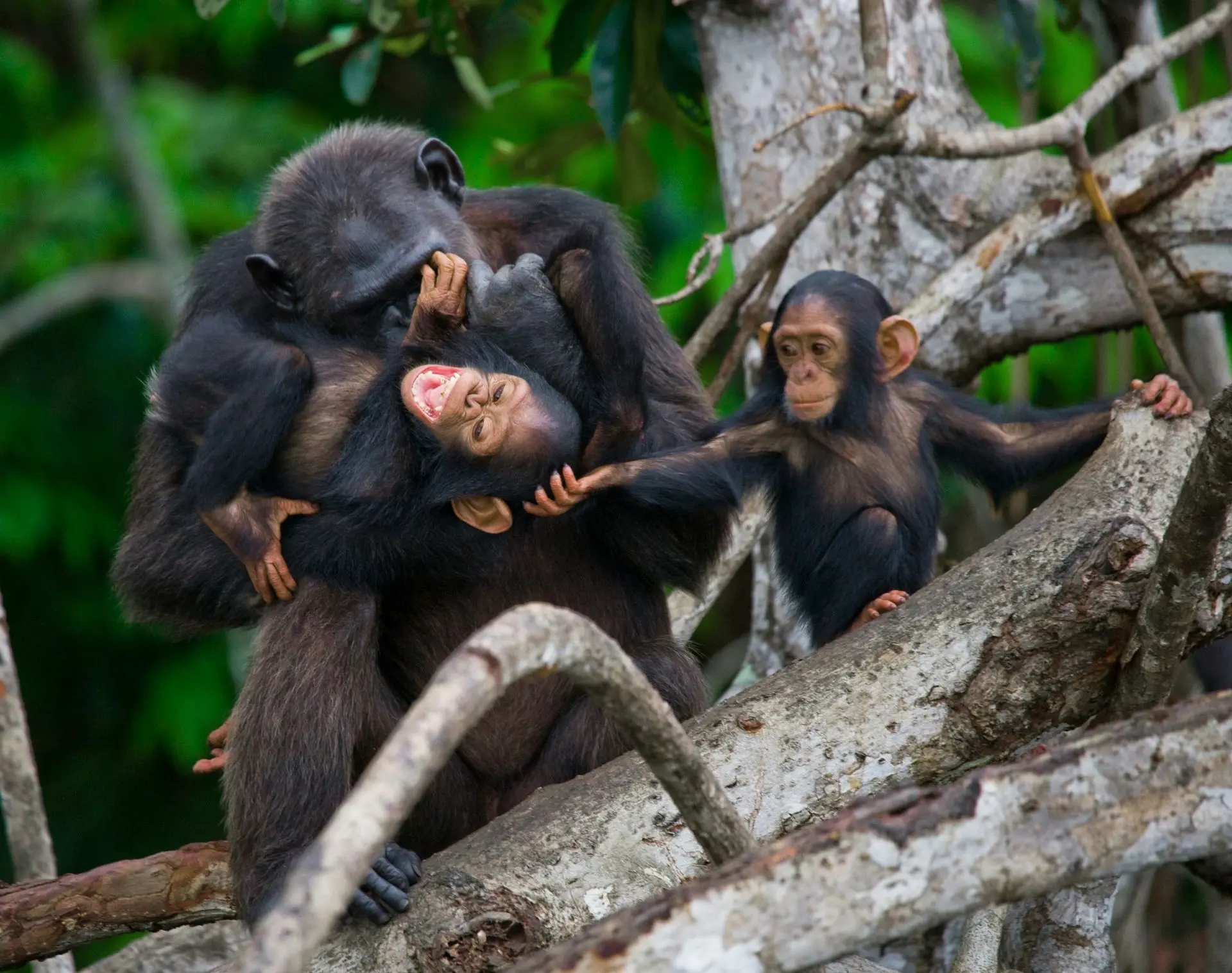
Our closest relatives—yet a different path
Chimpanzees and bonobos are our closest living relatives. Like us, they live in groups and show moments of collaboration. Because of this closeness, they are often used as models for our own past.
But this resemblance can be misleading.
Our ancestors did not simply scale up a chimpanzee-like society. They lived in a fundamentally different social structure—one that changed the rules of cooperation.

The role of pair bonds
The Band of Sisters and Brothers proposes that sustained cooperation between males only became possible when intense competition for access to females was reduced. This shift occurs in pair-bonded species, where a male and a female form a lasting alliance to raise offspring together.
Monogamy, in this view, is not a moral invention or a late cultural add-on. It is a social technology. A contract of mutual investment that stabilized families, reduced conflict, and opened the door to broader cooperation.

From couples to bands
As our ancestors left the trees and adopted a fully terrestrial life, they no longer defended small, exclusive territories. Family groups expanded. Sisters stayed close, brothers learned to cooperate, and children were raised within a wider circle of care.
From pair bonds grew families.
From families grew bands.
And from bands emerged a species uniquely capable of trust, collaboration, and shared invention.
This is the story of the Band of Sisters and Brothers—and of how cooperation made us human.