Part IV The threads of our Becoming
Our Story
Together, invention and intimacy shaped us. In this part, we follow two intertwined forces. Inventive Evolution and the Band of Sisters and Brothers transform clever apes into collaborative humans. These ideas offer a new lens on our origins, one we will test against fossils, artifacts, and emerging genetic evidence.
What if our inventions didn’t just reflect our biology—but began to shape it in return?
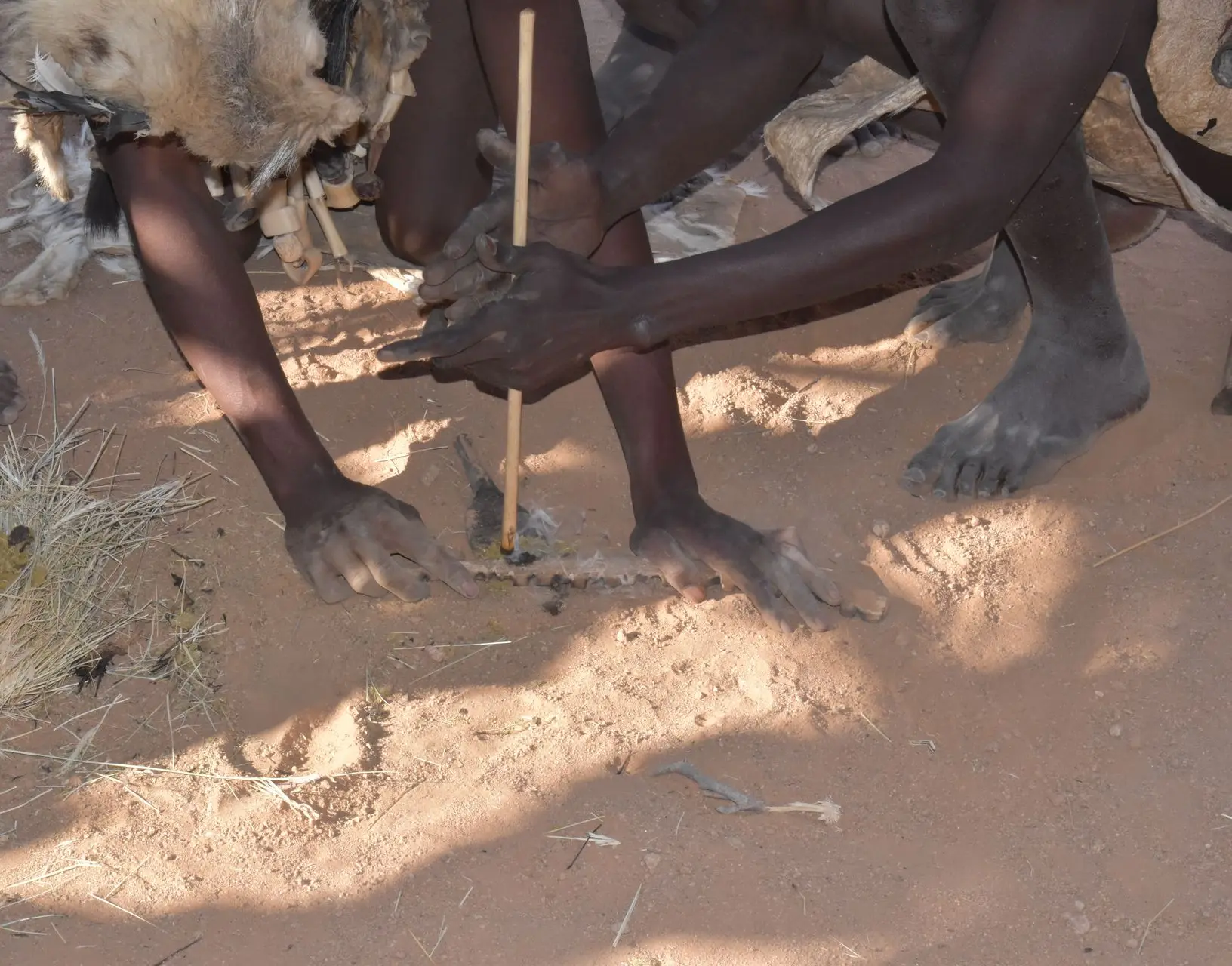
This is what fire brought
Food becomes more digestible when cooked, about doubling the nutrients we can get from it.
Our digestive tract can now shrink, enabling us to run faster.
We can sleep on the ground, as firelight protects us from predators. We do not need long arms any more.
Food becomes softer, far easier to chew. We gain hours per day. Men have more time to hunt.
We can offer babies solid food at a younger age. Breast-feeding stops earlier and women become fertile again sooner.
We have more babies. Women need to help each other. Our kind expands.
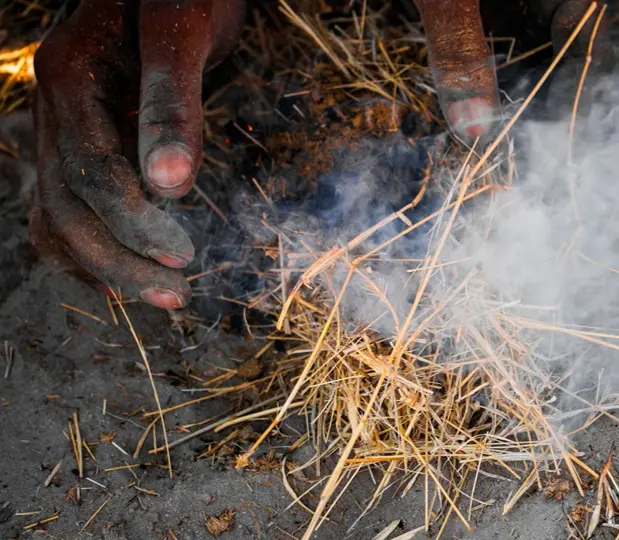
Homo habilis mastered fire ... and created a new species: Homo erectus, the first to walk like a man.
Man invented, and then we adapted to our inventions.
Inventive evolution and the growing brain
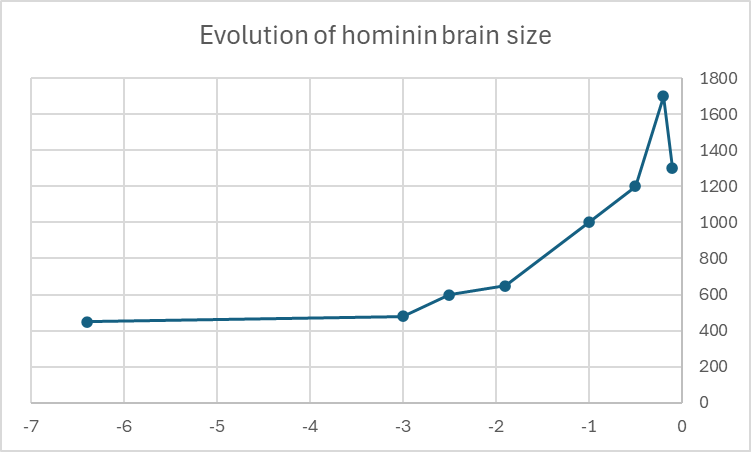
The graph plots brain size (in cc) over time, from 7 MA (million years ago) to present
The dawn of Homo, 3 MA is also the start of a continuous growth in hominin brain size.
I believe that inventive evolution provides the neatest explanation for this growth, as it is a recursive process that builds on previous inventions.
The last marker is Homo sapiens, us. We found a way to be more inventive without growing our brain to Neanderthal brain size: the Learning Brain.
Hominin tree and Inventive evolution

We have tried to validate Inventive Evolution against the tree of hominin evolution.
Stone tools are used by many species, starting 3.3 Million years ago.
New species appear when hominins discover the nutrition in carcasses. Larger groups can chase competitors, and genus Homo appears.
Homo erectus arises after mastering fire; they in term discover how to make better stone tools and canoes. They reach remote islands and new species arise.
These inventions drive brain growth, and brain growth drives inventions.