Part II Love, trust, and collaboration
Chimpanzees and bonobos are our closest relatives.
Yet we walked a different road.
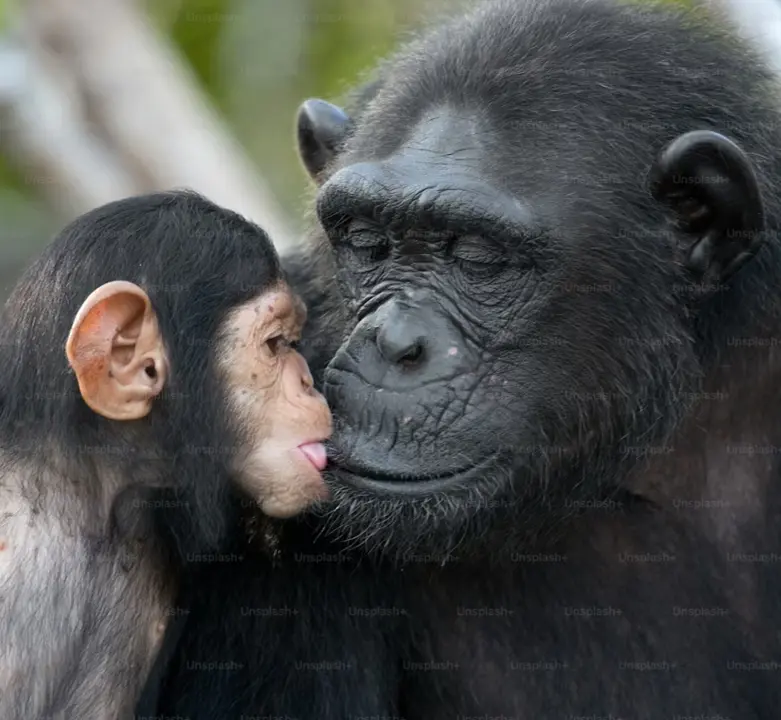

Chimpanzee male Photo by Mwangi Gatheca
Close cousins ... but the teeth tell the story
Chimpanzees are genetically over 98 % similar to humans, and close cousins.
But his canine teeth tell about a crucial difference: chimpanzee males fight each other for access to females. That is what Chimpanzee Politics is about...
Bonobos are equally related to us ... and way nicer
Yet they are no more an ancestor than are chimpanzees. Females achieved dominance through close collaboration and selected for less aggressive males.
But even though their story is more attractive than that of chimpanzees, we did not travel the same road.
We are not the third chimpanzee...
 Bonobos taking care of a baby Photo by Magnus Manske
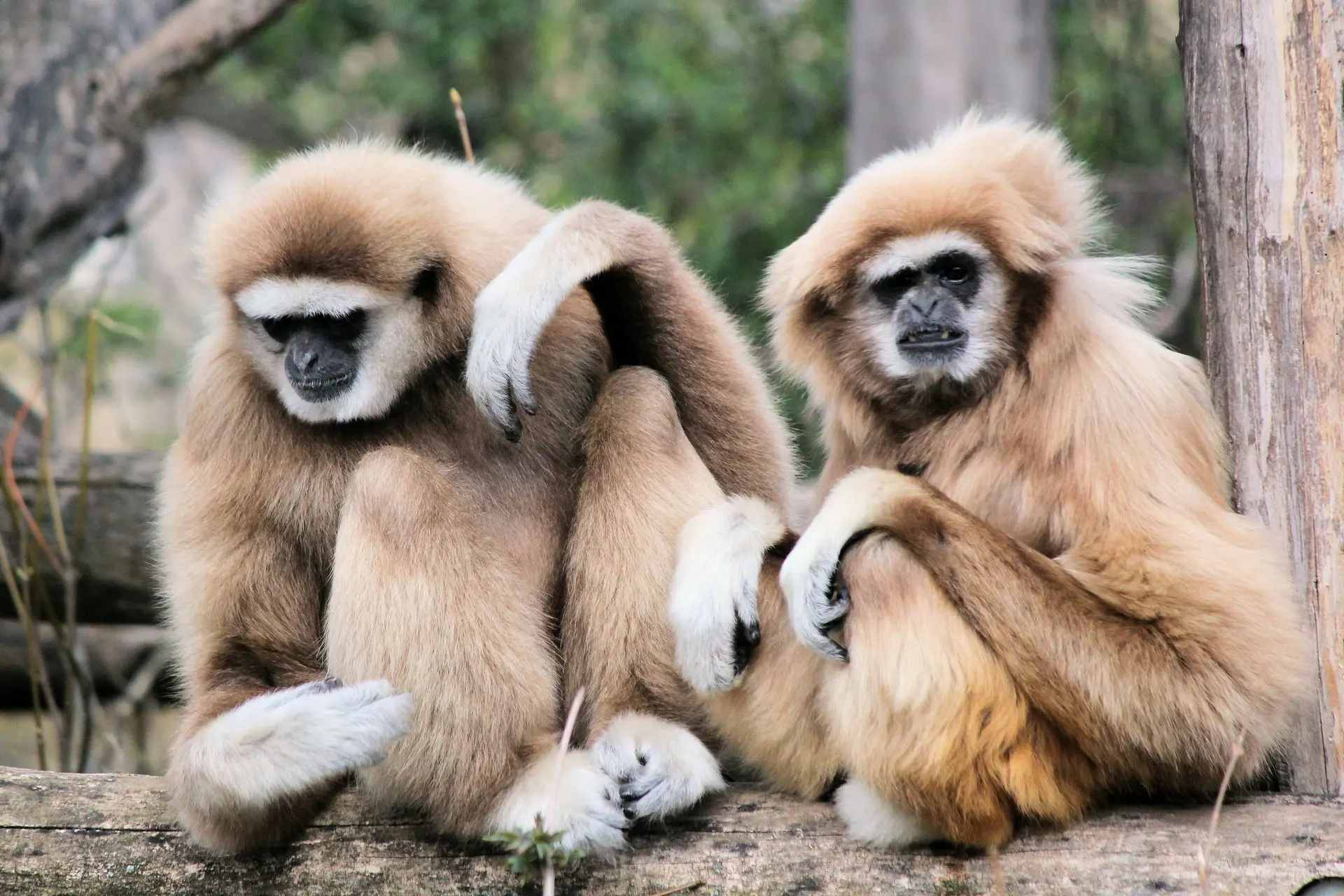
White-handed gibbon pair Photo Dusan Veverkolog
Gibbons may provide the answer
They are far less closely related to us. But the males do not have the aggressive teeth, and they live in couples, taking care of their offspring together. And of each other.
I believe our far ancestors lived in pairs, and kept the pair bonds alive in the band through love and intimate sex.
The Band of Sisters and Brothers
The inner circle includes the band of sisters—adult women—and their younger, pre-pubertal children. The outer circle represents men working, hunting, and relaxing together. The spokes are the pair bonds—emotional, sexual, and cooperative ties—linking the circles.
Hominins have expanded the pairs to first form family groups, and later to bands of 10 to 20 adults - while maintaining their pair bonds through frequent intimacy.
We have kept the promise to take care of our offspring together, as males and females, even as we started to live in groups. The females helped each other with the offspring, the males contributed by providing meat and protection.

We cannot triangulate how we became collaborative by only examining living primates. Closer related does not mean more similar behavior. We have adopted a unique, collaborative way of living.
But to understand our origins even better, we need to delve into our deep past.