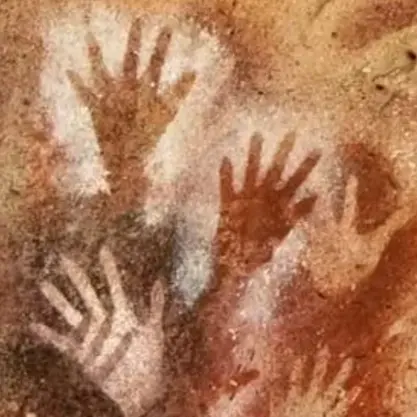
The Band of Sisters and Brothers
How Cooperation, Invention, and Love Made Us Human
A Guide for Curious Readers
This book is written for anyone who has ever wondered:
- Why does collaboration feel so good?
- Why do we trust, love, and form deep friendships?
- Why do we invent, teach, and care for the vulnerable?
- Why do we create beauty, art, and meaning?

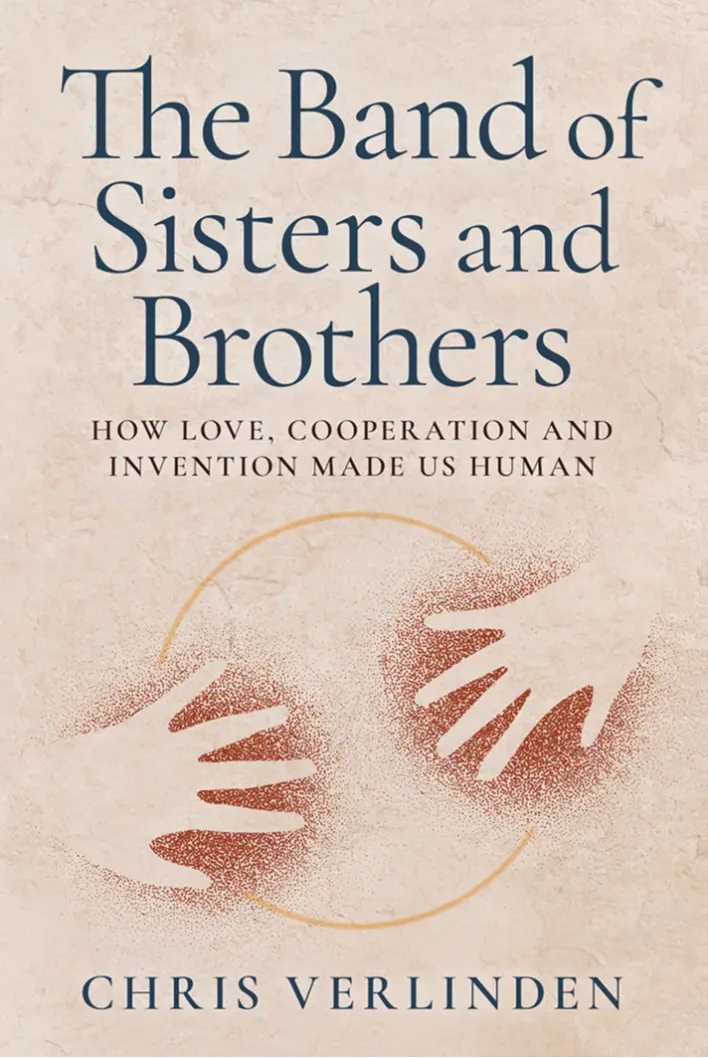
A Different Story of Human Evolution
We often hear that humans succeeded through competition, dominance, and aggression. But the evidence tells another story.
From the Old Man of Dmanisi—kept alive for years without teeth—to early families gathered around the fire, our ancestors survived because they cared for one another. Not the strongest, but the most connected.
I set out to answer a seemingly simple question: why are we able to collaborate efficiently?
This book formulates the simple answer:
We became human through trust and love, collaboration, and invention.
Why This Story Matters Now
We are more connected than ever—and yet often more divided. Understanding how cooperation shaped us helps us remember the instincts we need most:
to belong, to care, to create, and to act together.
Three forces that shaped us
These forces shaped not just our past, but the way we live, work, love, and create today.
The Band of Sisters and Brothers
Our lineage grew within stable, caring groups built around long-term bonds, shared parenting, and loyalty.
We derived from monogamous ancestors and used long-term pair bonds to build trust and shared commitment to raise offspring. We kept love alive when we started to live in groups.

Inventive Evolution
We used our brains and invented new ways of living. We learned to make tools and fire and became a different kind of being.
Invention and cooperation fed each other: new tools changed our lives, and our growing brains created new tools in return. We are truly unique in this: we invented ourselves.

The Learning Brain
Finally, Homo sapiens, our own species found a way to become eve more inventive.
By extending childhood, we became exceptionally curious, flexible, and cultural—able to learn, imitate, teach, and create meaning together. The cultural mind finally conquered the world.